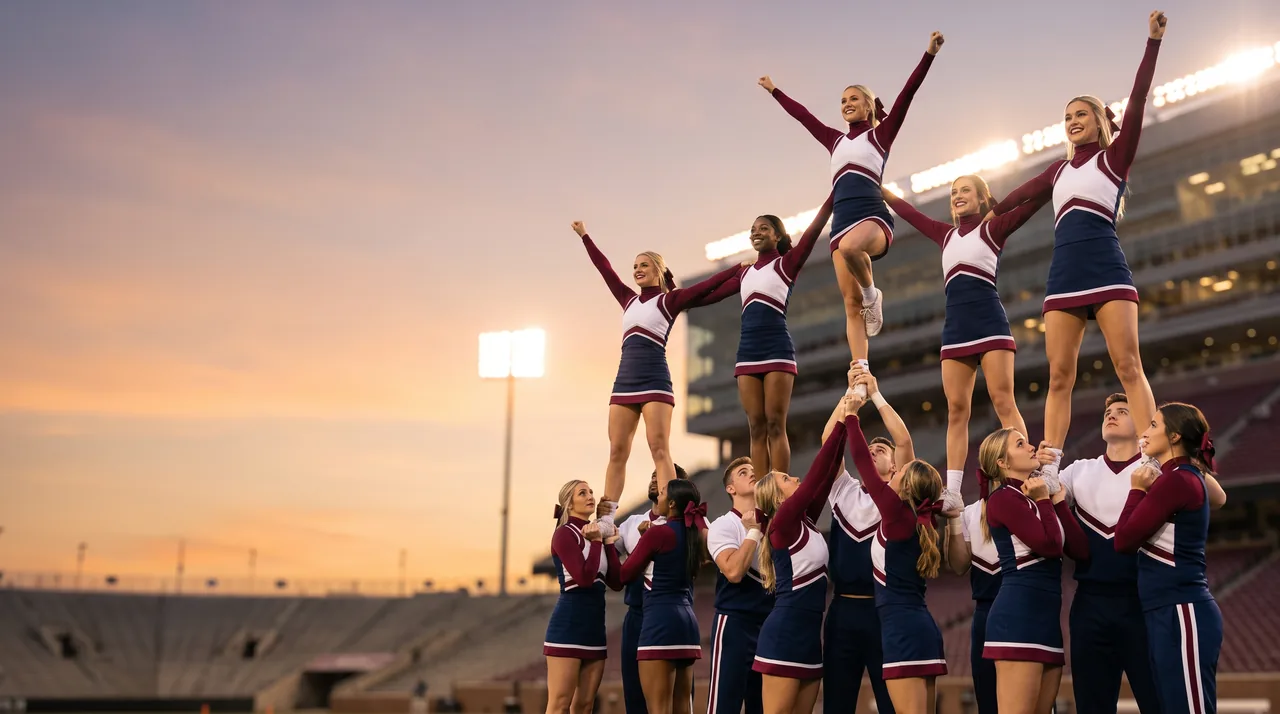
Scholarships
Cheerleading Scholarships and Cheer Scholarship Amounts
Cheer scholarships exist, but the school pays them, not the NCAA, and the award follows a roster spot. Here is what programs pay, the senior awards worth applying for, and how to get your athlete in front of the coaches who decide.
In short
Cheerleading scholarships are real but school funded. Where a college pays, awards usually run $500 to $3,200 a year, Tennessee reaches $7,000 in a fourth year and Hawaii gives full tuition to 12 to 14 cheerleaders. The money follows a roster spot, so an athlete earns it by making the team through video, clinics and tryouts.
- Typical award
- $500 to $3,200
- Top published
- Full tuition
- NCAA limit
- None
The basics
How college cheer scholarships work
Cheerleading is not an NCAA sport. That means no NCAA scholarship limits and no NCAA recruiting calendar for cheer. Each school decides on its own whether the spirit program offers aid, how it is funded and who controls it.
Where aid exists, the coach usually recommends athletes after tryouts, and the school awards the money through athletics, the spirit program or financial aid. Awards are commonly set one year at a time.
Some junior colleges and smaller four year schools treat competitive cheer as a varsity sport and use it to recruit. Butler Community College in Kansas, for one, gives every squad member an in-state books and tuition scholarship; see the JUCO cheer teams and what each pays. Acrobatics and tumbling and STUNT are separate sports built on cheer skills, with their own teams and their own aid, and NCAA members voted both championship sports in January 2026, with the first championships in spring 2027. See the acrobatics and tumbling colleges by division and the colleges with STUNT teams.
What schools actually pay varies more than most families expect. Tennessee pays up to $7,000 in a fourth year, Arkansas $2,000 to $3,200 a year, Hawaii full tuition to 12 to 14 cheerleaders, and Oklahoma State nothing at all. Our list of colleges with cheerleading scholarships shows 20 programs in their own words, with tryout dates.

Amounts
How much college cheer scholarships pay
Families usually expect a number and get a range. These are the amounts programs publish on their own athletics or spirit pages, read in fall 2026 and grouped by what the money actually looks like. The pattern is clear: a few schools pay real tuition, most pay a fixed yearly award, and some pay nothing at all.
| What the award looks like | Schools that publish it | Published amount |
|---|---|---|
| Full tuition | University of Hawaii at Manoa | 12 to 14 full tuition scholarships, in state and out of state |
| Award that grows each year | Tennessee, Arkansas | Tennessee up to $1,500, $3,000, $5,000 and $7,000 by year; Arkansas $2,000, $2,600, then $3,200 |
| Fixed award plus out of state waiver | Western Kentucky, Angelo State, Texas Tech | WKU $2,000 a year; Angelo State up to $1,000; Texas Tech out of state tuition coverage |
| Small award or stipend | Auburn, Arkansas Tech, Morehead State, Kansas | Auburn $900 a semester; Arkansas Tech $725 a semester; Morehead $500 to $750 a year; Kansas $325 a semester |
| Every member gets something, amount private | Kentucky, Ole Miss, Mississippi State, Eastern Kentucky | Not published; set by GPA, skill, years or need |
| No cheer award | Oklahoma State; Utah Valley charges a fee | OSU covers uniforms, camp and travel; UVU members pay $2,400 a year |
Every figure is from the school's own page. The full table with source links, tryout dates and 20 programs is on colleges with cheerleading scholarships.
The out of state waiver is often worth more
A $2,000 award at Western Kentucky comes with an out of state tuition waiver, and at most public universities that waiver is the bigger number. Compare net cost, not the headline award.
Four years adds up differently by school
At the top of each tier, Tennessee totals $16,500 over four years and Arkansas $11,000, against $2,600 at Kansas. The award usually rises only if the athlete stays on the roster and keeps the grade line.
Costs still land on the athlete
Uniforms, shoes, summer camp and travel are covered at some programs and billed at others. Utah Valley charges members a $2,400 yearly fee, so a small award there may not cover what the team costs.
Kinds of support
What a cheer award can look like
- Partial tuition A share of tuition, the most common form where a program has athletic aid.
- Book or fee stipend A fixed amount toward books, fees or program costs.
- Housing or meals At some schools, part of room or board instead of tuition.
- Program costs covered Uniforms, shoes, travel and camp paid by the program.
- Academic aid Merit scholarships from the school that a strong student can often add.
- Private scholarships Awards from cheer organizations, community groups and foundations.
Before college
Cheerleading scholarships for high school seniors
Outside the college programs, most cheer money for seniors comes from state coaches associations, state athletic associations and local booster clubs. The awards are small, usually $500, but competition is thin because few families know to look, and they stack with whatever a college offers. Nearly all of them require the coach to be a member, so ask your coach first.
| Award | Amount | Who can apply | Window listed for 2026 |
|---|---|---|---|
| NCHSAA Spirit Scholars Award (North Carolina) | Up to $500 | Varsity cheerleader, senior, 3.0 GPA, team invited to the NCHSAA Cheerleading Invitational, no essay | October 1 to November 6, 2026 |
| Iowa Cheerleading Coaches Association scholarship | Up to $500 | Senior with a 3.5 GPA whose coach is an ICCA member; essay and two recommendations | Closed February 15, 2026 |
| WACPC scholarship (Wisconsin) | Varies | Wisconsin senior, 3.25 GPA, cheer or dance, coach is a WACPC member; essay | January 19 to March 19, 2026 |
| High school booster club awards | Set by the club | Varsity cheerleaders at that school | Ask the head coach or booster president |
Award details as listed on College Board BigFuture and CollegeXpress in October 2026. Windows repeat each year but dates move, so confirm with the sponsor before you apply.
How to get one
How to get a cheerleading scholarship, year by year
-
1
Sophomore and junior year
Build the skill list coaches look for at your target level: running and standing tumbling, stunt position, jumps. Film clean, unedited clips as you land them.
-
2
Summer before senior year
Make the short list of programs and read each one's own page for what it pays. Registration at Tennessee opened July 15, 2026 for the 2027-28 team.
-
3
Fall of senior year
Attend recruitment clinics, where many coaches do their real scouting. Ole Miss held clinics on September 13 and October 18, 2026. Apply for state senior awards.
-
4
Spring of senior year
Send skills video before deadlines such as Arkansas on March 5, 2027, try out, and get the offer in writing with the amount, renewal rules and costs you still pay.
The step most families skip is being findable between those dates. Coaches at Louisville and Morehead State fill rosters by invitation and clinic rather than an open tryout, so an athlete they have never seen does not get the invitation. That is what a college cheer recruiting profile fixes. Programs that compete for national titles are on our list of the best cheer colleges, and two year programs that recruit hard are on JUCO cheer teams.
Before you accept
Questions to ask every program
- How much is the award, and what exactly does it cover?
- Is it for one year or several, and what does renewal require?
- What are the commitments: practices, game days, competitions, appearances?
- What costs does the athlete still pay, like uniforms, travel and camp?
- How does it combine with academic or need based aid?
- Is the offer in writing, and who at the school signs it?
Get seen
Coaches offer aid to athletes they know
A recruiting profile puts skills videos, level, graduation year, teams and titles in front of verified college coaches. The parent runs it and receives every contact request. The profile is free, and Recruiting Pro at $39 a month ($228 a year) adds featured placement to coaches, 10 skill videos and the list of coaches who viewed it. Against a single $2,000 award, a season of it is a small line in the recruiting budget.
Questions
About cheer scholarships
Are cheerleading scholarships a thing?
Yes. Plenty of colleges pay their cheerleaders, but the money comes from the school, not the NCAA, and the amounts are small next to most sports. On schools' own pages we read awards from $500 a year at Morehead State to $7,000 in a fourth year at Tennessee, and full tuition for 12 to 14 cheerleaders at Hawaii.
Does the NCAA give scholarships for cheerleading?
No. Sideline and competitive cheer are not NCAA sports, so there is no NCAA scholarship count and no NCAA recruiting calendar for cheer. Any award comes from the school's athletics or spirit budget. STUNT and acrobatics and tumbling are separate sports with their own NCAA championships from spring 2027 and their own aid.
Can you get a full ride scholarship for cheerleading?
Rarely. Hawaii is the clearest case we found, with 12 to 14 full tuition scholarships set aside for cheer. Most programs pay a fixed amount, often $500 to $3,200 a year, or waive out of state tuition, so a full ride usually means stacking a cheer award on top of academic merit aid.
How much are cheerleading scholarships?
Most cheer awards land between $500 and $3,200 a year. Kansas pays $325 a semester, Arkansas Tech $725 a semester, Arkansas $2,000 rising to $3,200, Western Kentucky $2,000 plus an out of state waiver, and Tennessee up to $7,000 in a fourth year. A few big programs, Oklahoma State among them, pay nothing.
How do you get a cheerleading scholarship?
Make the team. At almost every school the award follows a roster spot, so the path is a skills video, the school's clinic and its tryout. Start the list in junior year, attend fall clinics in senior year, and send video before spring deadlines such as Arkansas on March 5, 2027.
Do D1 schools give cheer scholarships?
Many do, but each school decides. Tennessee, Arkansas and Western Kentucky publish amounts, Kentucky and Ole Miss say every member receives something, Auburn pays a $900 a semester stipend and calls it not a scholarship, and Oklahoma State states it has no cheer scholarship program.
Are there cheerleading scholarships for high school seniors?
Yes, mostly through state coaches associations and booster clubs. The NCHSAA award in North Carolina pays up to $500, the Iowa Cheerleading Coaches Association up to $500 for seniors with a 3.5 GPA, and Wisconsin's WACPC award varies. Most require your coach to be a member.
Is a cheer scholarship renewed every year?
Usually it is awarded one year at a time and depends on staying on the team, keeping the grade requirement and meeting program commitments. Some schools raise the award with years on the team, as Tennessee and Arkansas do, so ask how renewal and raises work before you accept.
Can cheer aid be combined with academic scholarships?
Often it can. Kentucky sets awards partly by GPA, Dodge City adds an academic award at a 3.5 GPA, and most schools let a spirit award sit on top of merit aid. Ask the financial aid office in writing how a cheer award changes the rest of the package.
Do colleges recruit cheerleaders?
Yes. Coaches at Louisville and Morehead State fill rosters by invitation and clinics rather than open tryouts, and many programs scout all star and high school athletes through skills video. A coach can only offer aid to an athlete they know about, which is why video and a profile matter.