NCAA championship sport from spring 2027
Acrobatics and Tumbling Colleges for NCAA Acrobatics and Tumbling Scholarships
53 colleges sponsor acrobatics and tumbling for 2026-27: 14 in Division I, 28 in Division II and 11 in Division III. Division I and II programs can give athletic scholarships, split across the roster. Coaches recruit gymnasts and cheerleaders as tops, bases and tumblers, mostly from juniors and seniors.
School list from the NCATA member directory, read October 1, 2026.
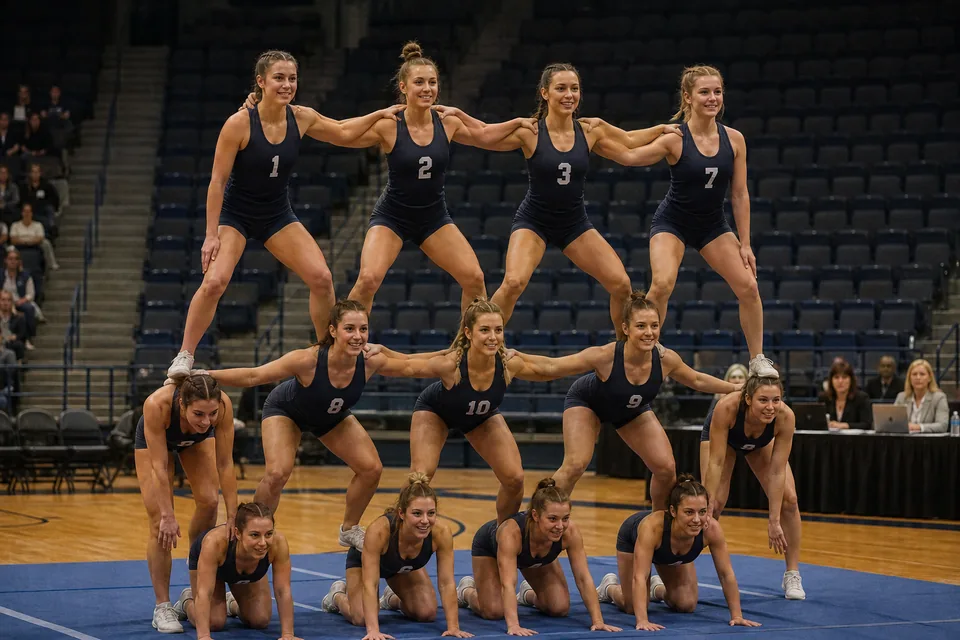
2026 national final
Baylor's 11th straight NCATA title, April 25, 2026, Azusa, California.
53
NCATA member colleges for 2026-27
1,296
college athletes in 2024-25
14
Division I scholarship equivalencies per team
~60%
of each roster from out of state
Every program, by division
Colleges with acrobatics and tumbling teams in 2026-27
The division decides whether there is athletic money at all, so read this list by column first. The NCATA says all teams still compete across divisions, and its schedule favors conference and regional meets. The program count grew from 47 in 2024-25 to 53 now, and at least three more schools start competing in 2027-28.
NCAA Division I
14Athletic scholarships allowed. Equivalency sport, 14 full awards under the last published Division I limit.
- Baylor University11 straight NCATA titles TX
- Canisius UniversityFirst season 2025-26 NY
- Duquesne University PA
- Gardner-Webb UniversityAdded February 2026 NC
- Iona University NY
- La Salle University PA
- Long Island University NY
- Manhattan UniversityFirst season 2025-26 NY
- Missouri State UniversityAlso sponsors STUNT MO
- Morgan State University MD
- University of OregonNCATA champion 2011 to 2014 OR
- Presbyterian College SC
- Quinnipiac University2026 runner up CT
- Sacred Heart UniversityCompetes from 2027-28 CT
NCAA Division II
28Athletic scholarships allowed. Equivalency awards set by each school, usually split across the roster.
- American International College MA
- Augustana University SD
- Azusa Pacific UniversityEntered Division III reclassification September 2026 CA
- Belmont Abbey College NC
- Bluefield State University WV
- Coker University SC
- Converse University SC
- D'Youville University NY
- Emmanuel University GA
- Fairmont State University WV
- Francis Marion University SC
- Frostburg State University MD
- Gannon University PA
- Georgian Court University NJ
- Glenville State University WV
- Hawaii Pacific University HI
- King University TN
- Kutztown University PA
- Lander University2026 Conference Carolinas champion SC
- Mars Hill University NC
- Newberry College SC
- Saint Leo University FL
- Shawnee State UniversityLaunches fall 2026 OH
- University of Montevallo AL
- West Liberty University WV
- West Virginia State University WV
- Wheeling University WV
- Wingate University NC
NCAA Division III
11No athletic scholarships. Academic, merit and need based aid only, the same as every other Division III sport.
- Adrian College MI
- Buffalo State University NY
- Calvin University MI
- Concordia University Wisconsin WI
- East Texas Baptist University TX
- Gettysburg CollegeCompetes from 2027-28 PA
- Stevenson University MD
- Texas Lutheran University TX
- Trine University IN
- University of Mary Hardin-BaylorFour straight Division III titles TX
- Westminster CollegeFirst season 2026-27 PA
Changes since the 2025-26 season: Caldwell University in New Jersey dropped its Division II program in July 2026. Siena University announced a Division I program for 2027-28 that is not yet on the NCATA list. Azusa Pacific, the 2026 championship host, entered the move to Division III on September 1, 2026, so ask about athletic aid there before you count on it.
Top acro and tumbling colleges
The best acrobatics and tumbling colleges by 2026 results
The NCATA's final regular season ranking of April 8, 2026 put eight teams into the national championship. Division I schools hold the top three spots, but Division II has nine of the fifteen, and Fairmont State was 9 and 0 when the final ranking came out.
Baylor has won every NCATA title held since 2015. Oregon won the four before that. In Division III, Mary Hardin-Baylor won its fourth straight title in 2026 and swept the Division III athlete, specialist, freshman and coach of the year awards.
- 1 Baylor TX D1
- 2 Oregon OR D1
- 3 Quinnipiac CT D1
- 4 Fairmont State WV D2
- 5 Augustana SD D2
- 6 Iona NY D1
- 7 Gannon PA D2
- 8 Saint Leo FL D2
- 9 Duquesne PA D1
- 10 Azusa Pacific CA D2
- 11 Glenville State WV D2
- 12 Lander SC D2
- 13 Mary Hardin-Baylor TX D3
- 14 Wingate NC D2
- 15 Hawaii Pacific HI D2
- Gold numbers made the eight team national championship field.
The money
Acrobatics and tumbling scholarships and how they are split
Acrobatics and tumbling is an equivalency sport. A coach has a budget measured in full scholarships and divides it among the roster, so most athletes get part of a scholarship, not a full ride. The NCATA's own parent FAQ answers the full ride question directly: programs award equivalency scholarships, and one full scholarship may be split among student athletes.
The last published Division I limit was 14 full equivalencies. Average Division I rosters run 36 athletes, so an even split is about 39% of a full scholarship each. In practice coaches weight the money toward the tops and tumblers they need most. Since July 2025, Division I schools inside the House settlement follow a roster cap of 55 for the sport instead of a scholarship cap, which lets a well funded program give more.
Division II rosters average 28 and the aid is also split. Division III gives no athletic money at all, so a Division III offer is really an academic and need based package. File the FAFSA either way, because the NCATA says programs at every level stack academic and need based aid on top of anything athletic.
Average roster and athletic aid by division
-
Division I 36 athletes
Athletic aid, 14 equivalencies under the last published limit
-
Division II 28 athletes
Athletic aid, split equivalency awards
-
Division III 20 athletes
No athletic aid, academic and need based only
Bar length against the Division I roster cap of 55. Averages are the national governing body's figures in the NCAA's fall 2025 sport sheet. Up to 28 athletes can be on the roster for a single meet.
What coaches recruit
Tops, bases and tumblers, and where they come from
NCATA coaches recruit by position and by skill and strength tests. Most college athletes came from artistic or Xcel gymnastics, trampoline and tumbling, acrobatic gymnastics, all star cheer or high school cheer and STUNT. A cheer flyer, base or tumbler already has the first half of the job.
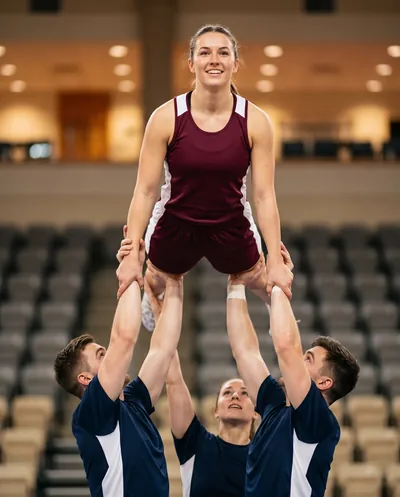
Top
Flexibility, body control and air sense. Cheer flyers and acro gymnasts convert most directly.
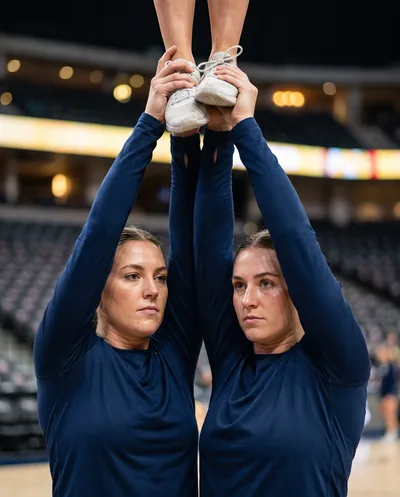
Base
Strength and timing for lifts, tosses and three layer pyramids. Strong cheer bases are recruited here.
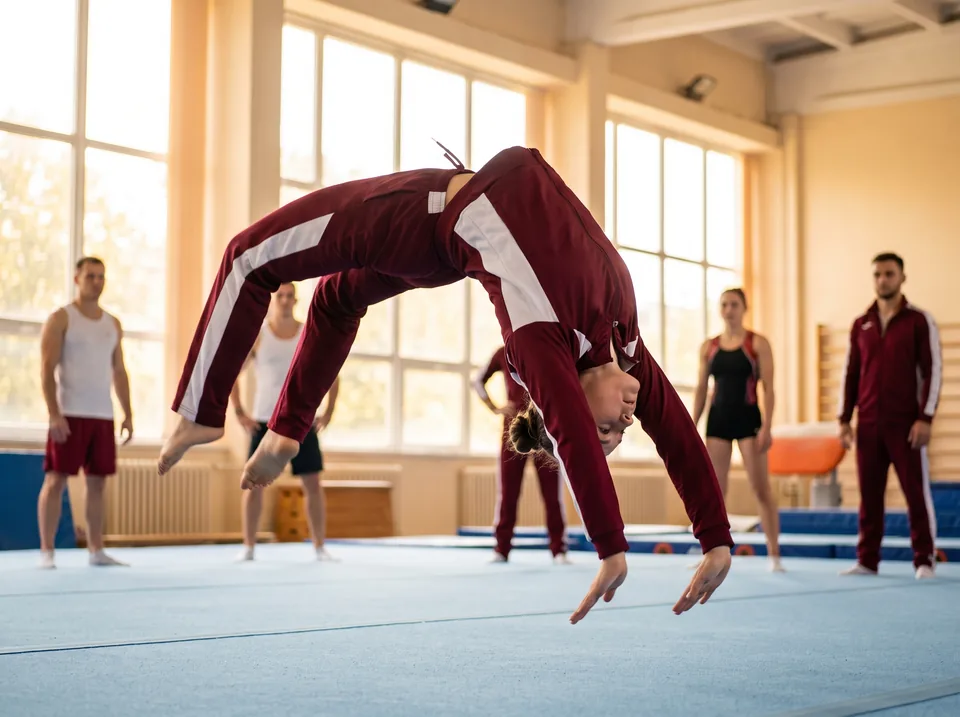
Tumbler
Running and standing passes with saltos and twists. Tumbling is worth 60 of the 300 points in a meet.
Coming from cheer and short on tumbling? A few months of private tumbling lessons before junior year is the most direct way to add the passes these coaches score.
How a meet is scored
Six events and 300 points in an NCAA acrobatics and tumbling meet
Two or three teams meet head to head on 13 carpet bonded foam mats laid on a basketball or volleyball floor. There are 20 heats, the home team goes last in each, and a meet takes 90 minutes to two hours. Each heat starts from a set difficulty value and officials deduct for execution, much like gymnastics.
Compulsory 40
Four identical heats every team performs, one each of acro, pyramid, toss and tumbling.
Acro 30
Groups of two to four. Lifts and tosses in heats of 5, 6 and 7 elements.
Pyramid 30
Three layer pyramids. One inverted, one synchronized, one open.
Toss 30
Bases toss one top who flips or twists. Two solo heats and one synchronized.
Tumbling 60
Three synchronized and three individual passes, scored on difficulty and connection.
Team 110
A routine to music with up to 24 athletes that shows every skill set.
The team routine alone is 110 of 300 points, more than a third of the meet. That is why choreography and synchronized skill count as much as any one star.
Getting recruited
How acrobatics and tumbling recruiting works
- 1 Before junior year Fill out the recruiting questionnaire on each program's athletics site. Coaches can read it at any age even when they cannot reply yet.
- 2 After sophomore year Communication with coaches generally opens. Most recruiting focuses on juniors and seniors.
- 3 Film the skills Running passes, standing tumbling such as a back handspring or standing tuck, and balance holds like a press handstand, pike or straddle hold. Film where you train, any shoes or barefoot.
- 4 Go to a campus clinic Camps and clinics are run by each school and let coaches see you in person.
- 5 Register for eligibility NCAA Division I and II need Eligibility Center registration and core courses. Start with your school counselor early.
Fall 2026 camps
Acrobatics and tumbling camps you can book now
Listed on the NCATA camps page and Baylor's camp site as of October 1, 2026. A one day clinic costs $85 to $190.
of each roster from out of state
| School | When | Who | Price |
|---|---|---|---|
| East Texas Baptist UniversityMarshall, TX | October 10, November 15 and December 5, 2026 | Day camp, high school | $100, 25% off with 3 or more athletes |
| Concordia University WisconsinMequon, WI | November 8, 2026 | Day camp, high school | $85 |
| Iona UniversityBronxville, NY | December 6, 2026 | Day camp, middle and high school | $110 |
| Iona UniversityBronxville, NY | December 10, 2026 | Day camp, elementary school | $95 |
| Baylor UniversityWaco, TX | Fall skills clinic, October 2026 | Ages 8 to 18, all levels | $190 |
Oregon's three day elite skills camp for ages 13 to 18 was $430 early and $475 late in its last posted season, the high end of what Division I camps charge.
Be found by the coaches who split the money
One recruiting profile for acro, STUNT and cheer coaches
An athlete who could be a top in acrobatics and tumbling, a flyer on a college cheer team or a STUNT athlete has three sets of coaches to reach. Put skills video, position, graduation year and titles on one private profile. Only coaches who verify with a college email can see it, a parent runs it for any athlete under 18, and every contact request goes to the parent.
The profile is free. Recruiting Pro adds featured placement, up to 10 videos and the list of coaches who viewed the profile for $39 a month or $228 a year, with no contract.
Also weighing sideline cheer? See the colleges with cheerleading scholarships and what each one pays, or the NCSA cost for cheer families before you sign a recruiting contract. For the head to head version of the sport, see every STUNT college by division.
Questions
Acrobatics and tumbling questions families ask
What colleges have acrobatics and tumbling?
The NCATA lists 53 member schools for 2026-27: 14 in NCAA Division I, 28 in Division II and 11 in Division III. Baylor, Oregon, Quinnipiac, Iona and Duquesne lead Division I. Siena has announced a 54th program for 2027-28, and Sacred Heart and Gettysburg start competing that same year.
Is acrobatics and tumbling an NCAA sport?
Yes. NCAA members voted acrobatics and tumbling a National Collegiate Championship sport at the January 2026 Convention, after six years as an emerging sport. The first NCAA championship is planned for spring 2027. Until now the NCATA ran the national championship, and Baylor won the last 11 of them.
Do acrobatics and tumbling colleges give scholarships?
Division I and Division II programs may give athletic scholarships. It is an equivalency sport, so one full award is usually split among several athletes. Division III schools give no athletic aid, only academic, merit and need based aid. Ask each coach what is available for your class year.
How many scholarships does acrobatics and tumbling have?
The last published Division I limit was 14 full equivalencies per team. With an average Division I roster of 36, an even split works out to about 39% of a full scholarship each. Division I schools in the House settlement now follow a roster cap of 55 instead of a scholarship cap.
What do acrobatics and tumbling coaches look for?
Coaches recruit by position: top, base or tumbler. They want running and standing tumbling, balance skills such as a press handstand or straddle hold, and strength. Most athletes come from artistic or Xcel gymnastics, trampoline and tumbling, all star cheer or high school cheer and STUNT.
When does acrobatics and tumbling recruiting start?
Coaches focus on juniors and seniors, and communication generally cannot begin until after the sophomore year. An athlete can still fill out a recruiting questionnaire on any program's site at any age, and coaches can read it even if they cannot reply yet.
Can a cheerleader do acrobatics and tumbling in college?
Yes, and many do. The NCATA lists all star cheer, high school cheer and STUNT and sideline cheer among its main recruiting pools, next to gymnastics. A flyer often becomes a top, a strong base stays a base, and an athlete with a standing full and running layouts can be recruited as a tumbler.
What is the best acrobatics and tumbling college?
By results, Baylor. It won 11 straight NCATA titles through 2026, beating Quinnipiac 271.835 to 266.265 in the final. Oregon, Quinnipiac and Fairmont State filled out the top four in the April 2026 rankings, and Mary Hardin-Baylor has won four straight Division III titles.
Related
Colleges with cheerleading scholarships
20 cheer programs and what each pays a year.
Cheerleading scholarships
How cheer awards work and what to ask before you accept.
College cheer recruiting
A private profile that verified college coaches browse.
Private tumbling lessons
Book a coach for the passes college coaches score.
The first NCAA title is spring 2027
Programs are adding roster spots now. Put your athlete where college coaches look.